
OSINT in Investigative Journalism: Utilizing Public Data to Uncover Facts
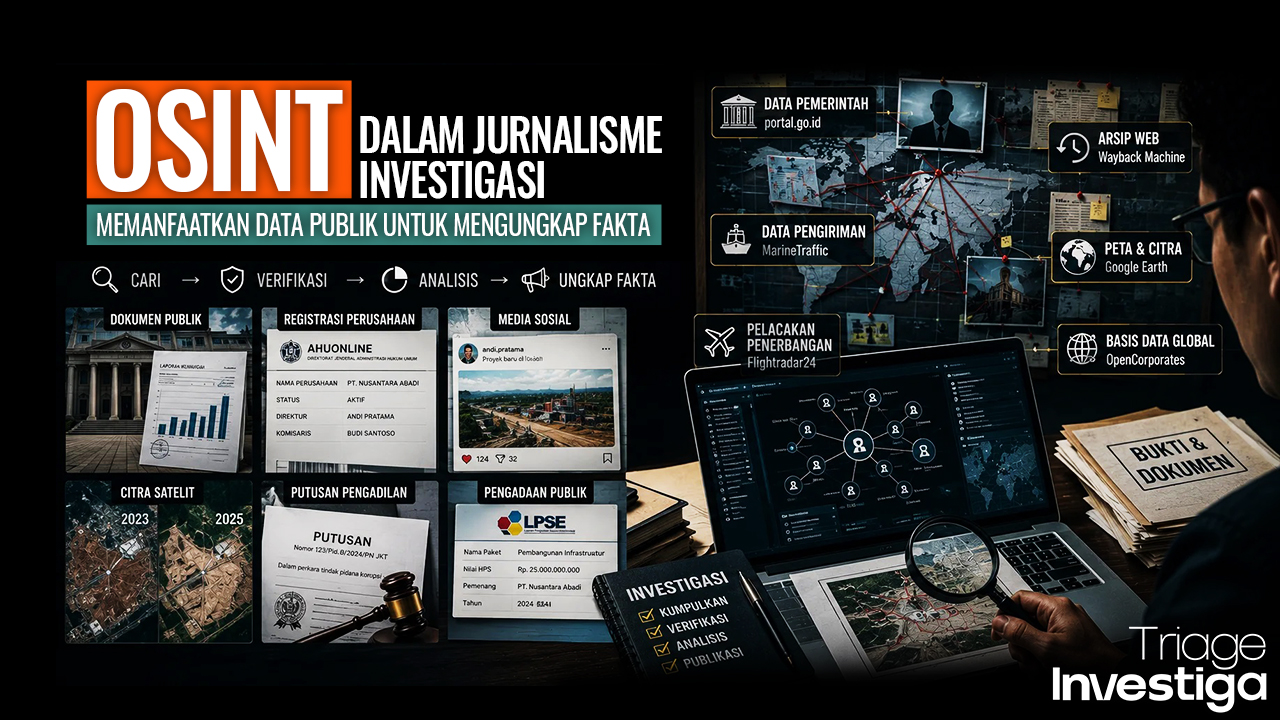
JAKARTA, July 6, 2026 — The development of digital technology has changed the way investigative journalism works. If previously reporters had to spend days searching physical archives or meeting sources directly, now parts of the investigation process can be started through the utilization of openly available data. This approach is known as Open Source Intelligence (OSINT), a method of collecting, verifying, and analyzing information from legitimate public sources to support the professional
What is OSINT?
Open Source Intelligence (OSINT) is the process of acquiring and analyzing information from publicly available sources. Unlike wiretapping, hacking, or illegal access to electronic systems, OSINT only uses legally accessible data.
This concept has long been used by government agencies, academics, researchers, journalists, and the private sector to support fact-based decision making. In investigative journalism, OSINT is an important tool for compiling an initial picture of an event, relationships between parties, and transaction patterns before further verification is carried out.
Why is OSINT Important in Investigative Journalism?
Modern investigations no longer rely entirely on closed sources. Much valuable information actually comes from public data scattered across various platforms. Through the OSINT approach, journalists can:
identify relationships between individuals or companies;
trace the chronology of an event;
compare statements with official documents;
verify the location and time photos or videos were taken;
find patterns that are invisible if data is observed separately.
However, every finding from OSINT must still be verified before publication.
Frequently Used Open Information Sources
Government Documents Many agencies provide publicly accessible information, such as regulations, court decisions, annual reports, to procurement of goods and services.
Company Registration
Information regarding business entities, directors, commissioners, or changes in ownership can be an initial clue in
Social Media Public posts can help understand the chronology, location, or relationships between individuals. However, social media content must be treated as an initial clue, not sole evidence.
Satellite Imagery and Digital Maps Mapping services allow journalists to compare the condition of a location over time, for example to see physical changes in certain areas.
Web Archives Sites that have been changed or deleted can sometimes still be traced through internet archive services, helping to understand the development of information over time.
Principles of Verification in OSINT
One common mistake is assuming all public data is definitely true. In investigative practice, every piece of information must be tested through a verification process. Some basic principles include:
checking the origin of the information;
comparing with independent sources;
confirming the date and time of publication;
checking the context of a picture or video;
avoiding conclusions based on a single source.
OSINT is not just about finding data, but also ensuring that the data is accurate and relevant.
OSINT and Journalistic Ethics
The use of public data must still respect journalistic ethics and privacy rights. Not all information available online is suitable for publication.
Journalists need to consider the public interest, the potential impact on individuals, and ensure that the publication does not violate the law or codes of ethics.
OSINT should be a means to strengthen the quality of investigations, not a tool to spread speculation.
Limitations of OSINT
Despite being highly beneficial, OSINT has a number of limitations.
Public data can be:
incomplete;
outdated;
containing errors;
manipulated by certain parties.
Therefore, OSINT cannot stand alone. The results need to be combined with interviews, field observations, official documents, and a confirmation process with the related
The Future of OSINT in the Era of Artificial Intelligence
The advancement of artificial intelligence (AI) accelerates the process of searching and analyzing large amounts of data. On the other hand, AI also brings new challenges such as synthetic images, deepfake videos, and false information that is increasingly difficult to distinguish from original content.
This condition makes the verification ability increasingly important. Investigators are not only required to be able to find information, but also to ensure its authenticity and context.
Conclusion
OSINT has become one of the important foundations in modern investigative journalism. By utilizing legally available information, journalists can build an initial understanding of an event, identify patterns, and construct a more measurable investigation direction. However, the main value of OSINT lies not in the amount of data collected, but in the ability to verify every piece of information critically and responsibly. In the digital era, when information circulates very quickly and not all of it is accurate, the ethical and professional use of OSINT helps strengthen the quality of investigative coverage while simultaneously increasing public trust in the results of journalistic work.
Get Firm News in your inbox
Be the first to know when we publish new Firm News updates — no spam, unsubscribe anytime.
Related Articles

KPK seizes hundreds of billions in 20 suitcases related to ATR/BPN sting operation
The seizure of hundreds of billions in 20 suitcases by the KPK at ATR/BPN serves as a stern reminder of the importance …
Read more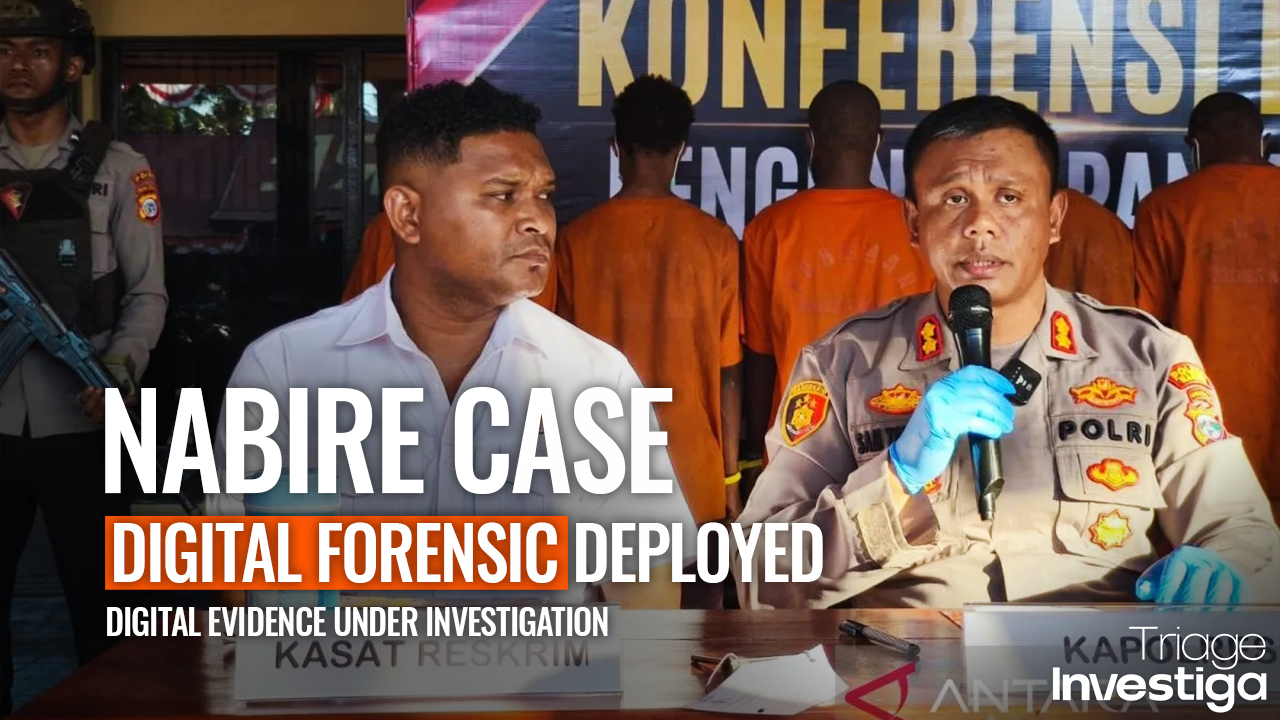
Police involve digital forensic experts to investigate the murder of SMP Negeri 1 Nabire student
Nabire Police involved digital forensic experts to extract data from three mobile phones as part of the investigation into the murder of …
Read more
Viral Call for August Protests on Social Media, Metro Police Forms This Special Team
The Jakarta Metro Police has officially formed a Preventive Strike Team to conduct early mitigation, detection, and monitoring regarding demonstration calls on …
Read more